G: mda, suntem pe pula, am vazut o stire in care
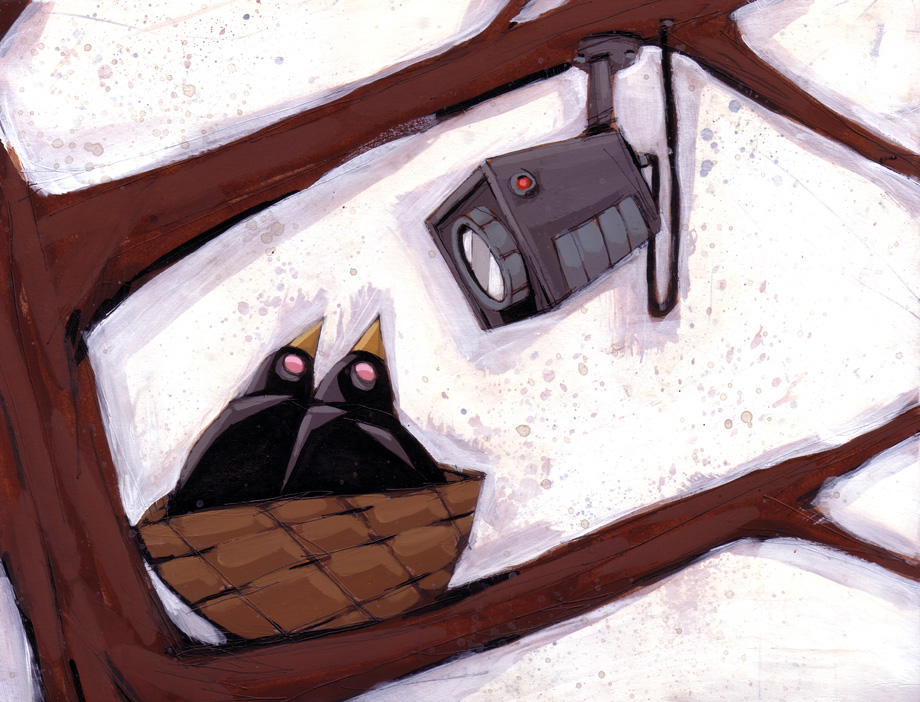
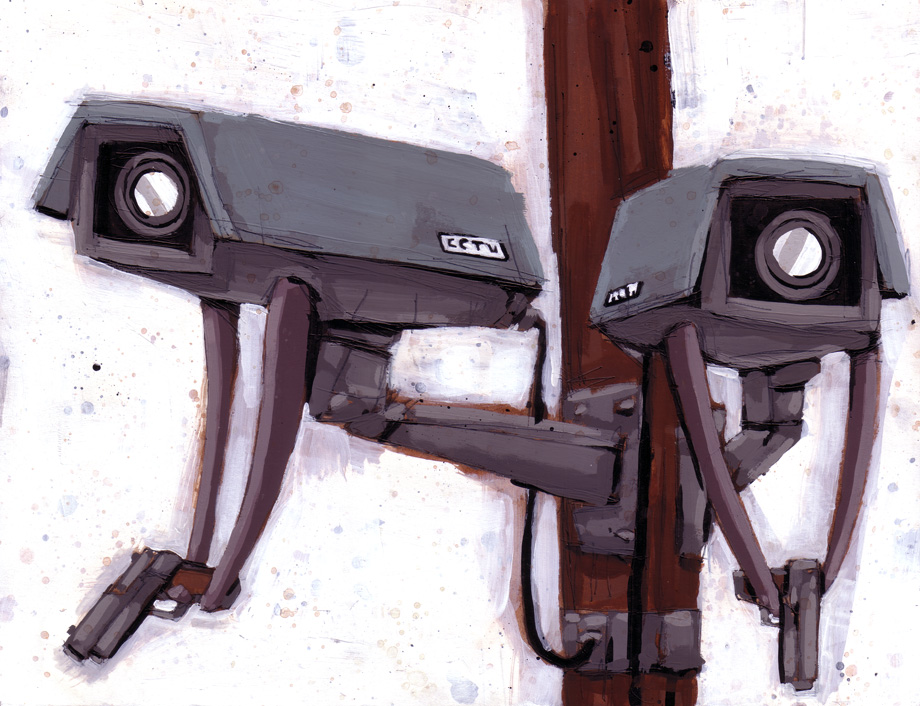
zicea ca o sa bage camere de supraveghere in clase la scoala, sa poata
vedea parintii ce le fac odraslele, faza e ca o sa ii obisnuiasca pe ai
mici cu prezenta camerelor de supraveghere
hpr: da, la asta nu m-am gandit
hpr: vor deveni adulti obisnuiti sa fie supravegheati
G: e mai usor sa-i obisnuiesti de mici ca asa e normal
G: si parintii o sa incurajeze asta
G: ei o sa se uite la ce fac copii lor in timp ce sefii lor se uita la ei cum fac asta

Showing posts with label control. Show all posts
Showing posts with label control. Show all posts
Thursday, May 24, 2012

Wednesday, April 18, 2012
Rockefeller:
“This present window of opportunity, during which a truly peaceful and interdependent world order might be built, will not be open for too long… We are on the verge of a global transformation. All we need is the right major crisis, and the nations will accept the New World Order.”
David Rockefeller speaking at the United Nations Ambassadors’ dinner. [Sept. 23, 1994]
Monday, March 19, 2012
Wednesday, March 14, 2012
Marx:
In their 1846 book The German Ideology, Marx and co-author Frederick Engels took a look at human history and made a plain but controversial observation. In any given historical period, the ideas that people generally think are the best and most important ideas are usually the ideas of the people in charge. If you have a lot of money and own a lot of property, then you have the power to propagandise your worldview and you have incentive to avoid appearing as if you're propagandising your worldview. Or, as Marx and Engels would put it: The ruling ideas of every epoch are the ideas of the ruling class.
Source: aljazeera.com
Source: aljazeera.com
Thursday, March 1, 2012
How riot control works:
Riot Control Tactics

The tactics used to control riots in the past were simple -- they were based on the fact that the police were almost always better-armed than the rioters. The tactics they used basically consisted of forming a line and charging into the crowd. Today, the police are still well-armed, but tactics have advanced significantly in hopes of preventing injuries.
When a riot is in full swing, police will deploy in a square formation with a command team at the center. The command team is protected on all four sides by echelons of troops deployed in groups of 10 or 12 officers. There is also an arrest team at the center of the square.
This tactical unit is very mobile and able to adapt on the fly to changes in the situation. If a threat suddenly appears behind or to one side of the unit, then the echelon facing that direction is designated the front of the unit. The entire team can then change the direction it's facing without a lot of maneuvering. Also, the echelons can cover each other when the team moves to take advanced positions. If the unit is under attack, the whole team does not move together: One echelon moves while the others provide covering fire or an actual physical screen (with riot shields). Then another echelon moves up into position.
The echelon is not meant to be an impenetrable wall of cop. In fact, the riot squad often leaves an escape route to let rioters run past the squad. The officers can adopt a passive position, in which they spread out and leave several yards between each officer. The crowd can then easily filter through them. If a particularly violent group moves toward the officers or they spot specific suspects they want to arrest, they can quickly close the gaps and form a tight line.
As the unit moves forward into a crowd, it will prod and push at anyone who doesn't respond to requests to move away by the time the front echelon reaches them. If they still refuse to move, the unit continues moving forward, but the front echelon opens up and passes around the protestors. Once the protestors are inside the square, the unit stops, the front echelon reforms and the arrest team processes the rioters. When they're done, the unit can continue moving.
Crowd-control Philosophy: Conflict
If a crowd gets unruly and starts taking violent action, then the police will switch to a more aggressive attitude. Their actions here reflect the fact that almost all riots are incited and lead by a few individuals who feel strongly or have something to gain from a violent confrontation. The majority of the people present either show up because something exciting is going on or are bystanders who got carried into the mob mentality. Faced with the possibility of arrest or confrontation with police, most of them simply want to escape and go home.
The first step is simple intimidation. Riot officers stand in strict formations and act with military precision. Once they form echelons -- lines of officers that effectively work as barriers -- the officers tap their batons on their shields or stomp their feet in unison. The result can be quite frightening to unarmed civilians -- it looks and sounds as if this group of armed and armored officers is getting ready to come crashing down with clubs swinging. In truth, this display is meant to scare off as many of the rioters as possible without the officers ever getting near them.
Police do not try to arrest every rioter. Their first targets are those who are leading the riot, because often the crowd will disperse without their leaders firing them up and encouraging them. All people who are spotted breaking a law are also targeted for arrest, especially if they injure or kill another person.
When it gets to the point where officers are actually in conflict with the rioters, the goal is still to disperse the crowd. A combination of advancing lines of officers and the use of noxious gas is used to direct the crowd in a certain direction or keep them away from a certain area. The crowd is never pinned down -- rioters are always given an escape route, since the whole point is to get them to run away.
Source: "How Riot Control Works" by Ed Grabianowski | howstuffworks.com
Thursday, February 16, 2012

Monday, July 4, 2011


Monday, May 30, 2011

Monday, February 14, 2011
'Animal Farm' online

Tuesday, February 8, 2011
Monday, January 10, 2011
Iuri Bezmezov:
Cei patru paşi de urmat pentru răsturnare a puterii unui stat, în viziunea KGB, sunt demoralizarea, destablizarea, criza şi normalizarea.
1. Demoralizarea dă rezultate după 15-20 ani, timp în care apare prima generaţie în minţile si valorile căreia au fost implantate, prin propagandă, influenţare, contact direct, aliniere şi racolare sectară sau religioasă, elementele care defăimează, demonetizează si subminează constant valorile împământenite.
Sindicatele fac politici sindicale, poliţia devine un represor iar infractorii sunt simpatizaţi, credinţa devine propagandă, iar propaganda devine credinţă, media se îmbâcseşte cu mediocritate şi cretinism, la şcoala nu se mai învaţă fundamente, ci debilităţi; încet şi criminal, valorile sunt substituite în vederea declanşării destabilizării.
2. Destabilizarea impune intoleranţa, radicalizarea, decredibilizează şi cretinizează instituţii, oamenii nu mai discută între ei, sunt susţinute doar certurile, pun mana pe armă şi se împuşcă unii pe alţii (deocamdată cu bile de cauciuc); apar lideri din neant, grupuri de activişti, ONG-uri, purtători ai diverselor "lupte legitime", media devine total opusă societării, antagonismul atinge un maximum iar agenţii conservaţi ani în şir devin activi şi militanţi, conducând "grupurile legitime" ce aduc societatea în criză, acuzând prin vocea societării civile corupţia şi incompetenţa celor de la putere.
3. În criză apar comitetele revoluţionare, emanaţii, comitetele nealese dar înfiinţate de "prietenii care ştiu de ce", iar lumea disperată aşteaptă un Mesia care să le dea păpică, muncă, linişte şi "normalitate".
Criza se termina numai când are loc o acţiune de forţă din partea autorităţilor, sau degenerează în război civil ori invazie.
Toate comitetele şi toţi luptătorii, pe timp de criză, sunt convinşi că sunt legitimi, societatea colapsează, este aşteptat liderul cu mână forte, salvatorul care nu va întarzia decât dacă nu au avut loc invazia sau războiul civil, ori intervenţia în forţă din partea statului, nu neapărat din partea aceloraşi membri ai guvernării.
4. 'Normalizarea' este etapa în care deja puterea a fost luată de un grup recunoscut pe plan extern, cu legitimitate în faţa sponsorului extern al evenimentelor. E etapa când agenţii, 'profesorii', propagandiştii, promotorii, conservaţii si foştii lideri tac, sau sunt eliminaţi; statistica arată ca se prefera eliminarea acestora.
De regulă, cei care preiau puterea vor stabilitate si linişte, vor "normalizare", şi de aceea elimină pe cei care au fost înainte la cârmă, şi pe cei care sunt consideraţi pericole potenţiale.
de aici
1. Demoralizarea dă rezultate după 15-20 ani, timp în care apare prima generaţie în minţile si valorile căreia au fost implantate, prin propagandă, influenţare, contact direct, aliniere şi racolare sectară sau religioasă, elementele care defăimează, demonetizează si subminează constant valorile împământenite.
Sindicatele fac politici sindicale, poliţia devine un represor iar infractorii sunt simpatizaţi, credinţa devine propagandă, iar propaganda devine credinţă, media se îmbâcseşte cu mediocritate şi cretinism, la şcoala nu se mai învaţă fundamente, ci debilităţi; încet şi criminal, valorile sunt substituite în vederea declanşării destabilizării.
2. Destabilizarea impune intoleranţa, radicalizarea, decredibilizează şi cretinizează instituţii, oamenii nu mai discută între ei, sunt susţinute doar certurile, pun mana pe armă şi se împuşcă unii pe alţii (deocamdată cu bile de cauciuc); apar lideri din neant, grupuri de activişti, ONG-uri, purtători ai diverselor "lupte legitime", media devine total opusă societării, antagonismul atinge un maximum iar agenţii conservaţi ani în şir devin activi şi militanţi, conducând "grupurile legitime" ce aduc societatea în criză, acuzând prin vocea societării civile corupţia şi incompetenţa celor de la putere.
3. În criză apar comitetele revoluţionare, emanaţii, comitetele nealese dar înfiinţate de "prietenii care ştiu de ce", iar lumea disperată aşteaptă un Mesia care să le dea păpică, muncă, linişte şi "normalitate".
Criza se termina numai când are loc o acţiune de forţă din partea autorităţilor, sau degenerează în război civil ori invazie.
Toate comitetele şi toţi luptătorii, pe timp de criză, sunt convinşi că sunt legitimi, societatea colapsează, este aşteptat liderul cu mână forte, salvatorul care nu va întarzia decât dacă nu au avut loc invazia sau războiul civil, ori intervenţia în forţă din partea statului, nu neapărat din partea aceloraşi membri ai guvernării.
4. 'Normalizarea' este etapa în care deja puterea a fost luată de un grup recunoscut pe plan extern, cu legitimitate în faţa sponsorului extern al evenimentelor. E etapa când agenţii, 'profesorii', propagandiştii, promotorii, conservaţii si foştii lideri tac, sau sunt eliminaţi; statistica arată ca se prefera eliminarea acestora.
De regulă, cei care preiau puterea vor stabilitate si linişte, vor "normalizare", şi de aceea elimină pe cei care au fost înainte la cârmă, şi pe cei care sunt consideraţi pericole potenţiale.
de aici
Monday, December 20, 2010

Friday, September 17, 2010
Rhineheart:
You have a problem, Mr. Anderson. You think that you're special.
You believe that somehow the rules do not apply to you.
Obviously, you are mistaken.
(The Matrix, written by Larry and Andy Wachowski, 1996)
You believe that somehow the rules do not apply to you.
Obviously, you are mistaken.
(The Matrix, written by Larry and Andy Wachowski, 1996)
Thursday, July 29, 2010

Monday, July 12, 2010
[...] Because of the assimilation of the strikes and their transformation into another democratic right, this threat has turned into nothing more than a simple - and this only apparently- happy break from everyday life.
from non-fides.fr
Thursday, July 8, 2010
258+
De la formarea ONU în 1947, lumea a fost martora a 258+ conflicte armate, adică mai multe războaie decat în întreaga sa istorie scrisă până în acel punct. De ce asta? De fiecare data când unul dintre aceste conflicte erupea - de obicei intr-o zona în care nu mai fuseseră războaie, se întâmpla într-un mod în care solicita intervenţia vesticilor... şi de fiecare dată ni s-a spus de către media că aceste intervenţii se petrec pentru a asigura pacea... de fiecare dată ne spuneau "pentru a instaura pacea ne folosim de război", "pacea provine din războaie", "războaiele aduc pace", "războiul e pace" ...este dublu limbaj, in sens orwellian.
Monday, July 5, 2010
Unabomber:
204. Revolutionaries should have as many children as they can. There is strong scientific evidence that social attitudes are to a significant extent inherited. No one suggests that a social attitude is a direct outcome of a person's genetic constitution, but it appears that personality traits tend, within the context of our society, to make a person more likely to hold this or that social attitude. Objections to these findings have been raised, but objections are feeble and seem to be ideologically motivated. In any event, no one denies that children tend on the average to hold social attitudes similar to those of their parents. From our point of view it doesn't matter all that much whether the attitudes are passed on genetically or through childhood training. In either case they are passed on.
(from Industrial Society and Its Future by Theodore Kaczynski)
Thursday, June 3, 2010
Goering:
"Of course the people don't want war. But after all, it's the leaders of the country who determine the policy, and it's always a simple matter to drag the people along whether it's a democracy, a fascist dictatorship, or a parliament, or a communist dictatorship. Voice or no voice, the people can always be brought to the bidding of the leaders. That is easy. All you have to do is tell them they are being attacked, and denounce the pacifists for lack of patriotism, and exposing the country to greater danger."
Herman Goering
Herman Goering
Friday, May 7, 2010
Magicienii sovietici

În această imagine, Nikolai Yezhov apare alături de Voroshilov, Molotov, şi Stalin vizitând Canalul Marea Albă-Marea Baltică

În această a doua imagine, Yehzov - între timp epurat - a fost eliminat.
"The Great Purge" was a series of campaigns of political repression and persecution in the Soviet Union orchestrated by Joseph Stalin in 1936–1938. It involved a large-scale purge of the Communist Party and Government officials, repression of peasants, Red Army leadership, and the persecution of unaffiliated persons, characterized by widespread police surveillance, widespread suspicion of "saboteurs", imprisonment, and executions. In Russian historiography the period of the most intense purge, 1937–1938, is called Yezhovshchina (Russian: Ежовщина; literally, "The Yezhov Regime"), after Nikolai Yezhov, the head of the Soviet secret police, NKVD.
sursa: wikipedia
"The memory hole" is a metaphor for the alteration or outright disappearance of inconvenient or embarrassing documents, photographs, transcripts, or other records, such as from a web site or other archive, particularly as part of an attempt to give the impression that something never happened. The concept comes from George Orwell's novel, Nineteen Eighty-Four.
sursa: wikipedia
Tuesday, March 2, 2010



Subscribe to:
Posts (Atom)