Showing posts with label war. Show all posts
Monday, September 17, 2012
Wednesday, November 10, 2010
Thursday, July 8, 2010
258+
De la formarea ONU în 1947, lumea a fost martora a 258+ conflicte armate, adică mai multe războaie decat în întreaga sa istorie scrisă până în acel punct. De ce asta? De fiecare data când unul dintre aceste conflicte erupea - de obicei intr-o zona în care nu mai fuseseră războaie, se întâmpla într-un mod în care solicita intervenţia vesticilor... şi de fiecare dată ni s-a spus de către media că aceste intervenţii se petrec pentru a asigura pacea... de fiecare dată ne spuneau "pentru a instaura pacea ne folosim de război", "pacea provine din războaie", "războaiele aduc pace", "războiul e pace" ...este dublu limbaj, in sens orwellian.
Monday, July 5, 2010
Minimanual of the Urban Guerrilla
"The urban guerrilla is an implacable enemy of the regime, and systematically inflicts damage on the authorities and on the people who dominate the country and exercise power. The primary task of the urban guerrilla is to distract, to wear down, to demoralize the military regime and its repressive forces, and also to attack and destroy the wealth and property of the foreign managers and the [...] upper class."
Minimanual of the Urban Guerrilla by Carlos Marighella
Thursday, June 3, 2010
Goering:
"Of course the people don't want war. But after all, it's the leaders of the country who determine the policy, and it's always a simple matter to drag the people along whether it's a democracy, a fascist dictatorship, or a parliament, or a communist dictatorship. Voice or no voice, the people can always be brought to the bidding of the leaders. That is easy. All you have to do is tell them they are being attacked, and denounce the pacifists for lack of patriotism, and exposing the country to greater danger."
Herman Goering
Herman Goering
Monday, May 17, 2010
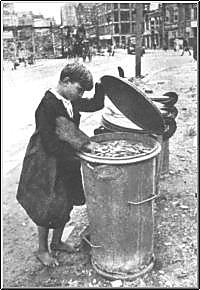
Berlin '45
Hamstern (literally, "to hamster"): This meant to travel into the countryside, in order to exchange possessions for food. Anything from watches and jewelry to blankets and rugs were exchanged for very small amounts of food.
Fringsen: This meant to steal to survive. This word is etymologically based on the surname of Cardinal Josef Frings, a senior figure in the Catholic Church of Cologne, who famously gave his blessing to those who had to steal in order to feed their family.
sursa:wikipedia.org
Wednesday, December 3, 2008
Friday, October 24, 2008
Latuff


(by Carlos Latuff. more here.)"Ramallah is not Auschwitz. Israel is not the Third Reich. We have no death camps and we haven't massacred one third of the Palestinian population in gas chambers. Therefore, everything we do is quite all right. We may fill the occupied territories with tear gas and blood, we may kill and injure and torture and blackmail and dispossess, we may surround millions by electric fences and tanks in tiny enclaves, we may hold them under siege and daily bombing, we may make pregnant women walk to hospitals, and we shoot ambulances too, don't we. But as long as we fall even an inch short of the atrocities of Nazi Germany, it's all fine and good, and don't you dare make the comparison."
Ran HaCohen (writer, and teacher at Tel-Aviv University)
Monday, June 23, 2008
Despre Factorul Hannibal
Factorul Hannibal e găinaţul care îţi pică pe mânecă atunci cand te duci la o întâlnire importantă. E mama care te sună la ora doişpe jumate, când eşti praf şi nu eşti în stare sa discuţi articulat nici cu fierul de călcat. E elementul neprevăzut şi implacabil care îţi distruge un întreg eşafodaj de planuri repetate mental şi bine puse la punct.
Hannibal era tuciuriu şi fenician de origine, adica din nordul Cannan-ului, adica pe unde e acum Libanul, adica megadeparte. Hannibal şi-a asamblat o armată barosană, elefanţi de luptă incluşi, şi a plecat să se trosnească cu Imperiul Roman. În Peninsula Italică, fireşte, că doar nu la el acasă. Pe drum s-a bătut cu toţi, adică cu o grămadă de triburi prin ograda cărora a trecut. Totul a mers bine până când a fost fost forţat să treacă Alpii. Unde, fireşte, mare parte din elefanţi au mierlito. Pentru că NU ERA LOCUL LOR ACOLO. Ok, deci Hannibal a ajuns în Italia cu mai puţin de jumate din armată, lăsaţi pe drum, şi în ciuda faptului că era un tactician strălucit, a luat-o într-un final în freză.
Hannibal nu a luat în calcul un factor, traversarea Alpilor, şi asta l-a costat Roma. În ciuda planificării atente. La naiba, în ciuda ELEFANŢILOR.
Hannibal era tuciuriu şi fenician de origine, adica din nordul Cannan-ului, adica pe unde e acum Libanul, adica megadeparte. Hannibal şi-a asamblat o armată barosană, elefanţi de luptă incluşi, şi a plecat să se trosnească cu Imperiul Roman. În Peninsula Italică, fireşte, că doar nu la el acasă. Pe drum s-a bătut cu toţi, adică cu o grămadă de triburi prin ograda cărora a trecut. Totul a mers bine până când a fost fost forţat să treacă Alpii. Unde, fireşte, mare parte din elefanţi au mierlito. Pentru că NU ERA LOCUL LOR ACOLO. Ok, deci Hannibal a ajuns în Italia cu mai puţin de jumate din armată, lăsaţi pe drum, şi în ciuda faptului că era un tactician strălucit, a luat-o într-un final în freză.
Hannibal nu a luat în calcul un factor, traversarea Alpilor, şi asta l-a costat Roma. În ciuda planificării atente. La naiba, în ciuda ELEFANŢILOR.
Saturday, April 26, 2008
...and Onoda ordered the men to take to the hills.
"Second Lieutenant Hiroo Onoda (Onoda Hirō; born March 19, 1922) is a former Japanese army intelligence officer who fought in World War II, and did not surrender until 1974."
Hiroo Onoda on Wikipedia
Subscribe to:
Posts (Atom)